


Taxation and Taxes
Quebec Self-Employed tax 2026: Everything you need to know
3/8/2026
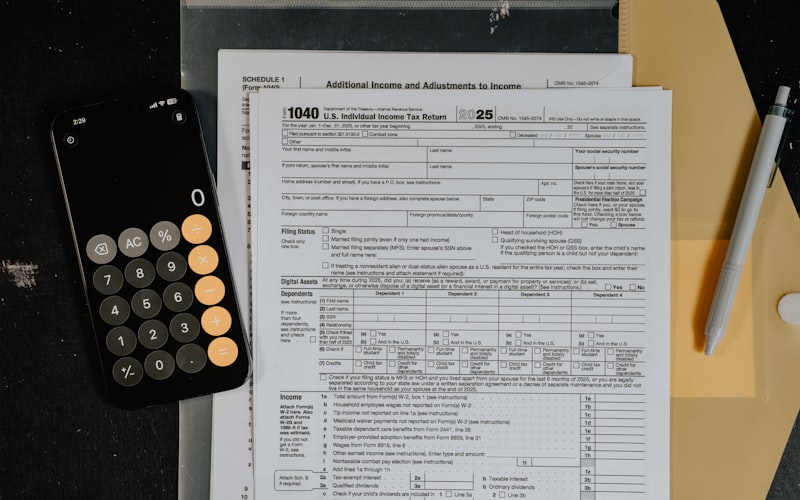
Taxes for Self-Employed Individuals in Quebec is a must-know topic for the hundreds of thousands of self-employed professionals in the province. Unlike employees, self-employed individuals must manage their own tax obligations, calculate their deductions, and pay their social insurance contributions. This comprehensive guide explains everything you need to know for the 2026 tax year, with handy tables and practical advice to help you avoid unpleasant surprises.
A self-employed worker (or independent contractor) is a person who carries out an economic activity on their own account, without a relationship of subordination to an employer. According to Revenu Québec, you are considered self-employed if you control your work methods, provide your own tools, and assume the financial risks of your business.
Self-employed workers can be found in every sector: consulting, technology, construction, design, writing, professional services, healthcare, and many others. In Quebec, they account for nearly 15% of the workforce. To understand the Differences Between Self-Employed Individuals and Employees, check out our dedicated guide.
Even if you work for only one client, you may be considered self-employed by Revenu Québec and the CRA. It is the nature of the working relationship, not the number of clients, that determines your tax status.
As a self-employed person in Quebec, you must file Two separate tax returns Every year:
These forms allow you to report your gross income, eligible expenses, and net business income. For incorporated entrepreneurs who also file a tax return for your business Business Tax Return, the forms are different (T2 and CO-17).
| Deadline | 2026 Deadline | Details |
|---|---|---|
| Payment of the Tax Balance | April 30, 2026 | Any balance due for the year 2025 must be paid by this date, even if you have until June 15 to file your return. |
| Filing the Tax Return | June 15, 2026 | Deadline for filing your T1 and TP-1 returns (with T2125 and TP-80). |
| Tax Instalments | March 15, June 15, Sept. 15, Dec. 15 | Quarterly payments are required if your net tax liability exceeds $1,800 (federal) or $1,800 (provincial). |
| GST/QST Registration | Once income exceeds $30,000 | Registration is required within 29 days of exceeding the $30,000 threshold over four consecutive quarters. |

If your net tax liability exceeds $1,800 at the federal level or $1,800 at the provincial level, you must pay Quarterly tax instalments. Revenu Québec and the CRA will send you reminder notices with suggested amounts, but it’s up to you to calculate the actual amount if your income varies from year to year.
Failing to make your estimated tax payments on time results in Daily Compound Interest at the prescribed rate. To learn more about managing these payments, see our article on GST and QST tax instalments.
Self-employed individuals are taxed as individuals on their Net business income (gross income minus eligible expenses). Here are the 2026 federal and provincial tax rates you need to know. For a complete breakdown of tax rates, see our Guide to Tax Rates for SMEs in Quebec in 2026.
| Taxable Income Bracket | Federal Tax Rate | Quebec Tax Rates | Combined Tax Rate |
|---|---|---|---|
| $0 to $57,375 | 15.00% | 14.00% | 26.53% |
| $57,376 to $98,540 | 20.50% | 14.00% | 31.71% |
| $98,541 to $114,750 | 20.50% | 19.00% | 36.12% |
| $114,751 to $126,000 | 26.00% | 19.00% | 41.12% |
| $126,001 to $177,882 | 26.00% | 24.00% | 45.71% |
| $177,883 to $253,414 | 29.00% | 24.00% | 48.22% |
| $253,415 and up | 33.00% | 25.75% | 53.31% |
The combined rate takes into account the federal tax credit for Quebec residents (16.5% of the basic federal tax). That is why the total federal and provincial taxes are not simply the sum of the two. A tax specialist can help you optimize your tax situation.
A self-employed person with a net income of $75,000 in 2026 will pay approximately:
This calculation illustrates the importance of planning your tax planning and maximize your eligible deductions.
One of the main advantages of being self-employed is the ability to Deduct all reasonable expenses incurred to earn business income. Understanding these deductions can save you thousands of dollars. For a comprehensive guide, check out our article on Tax-Deductible Business Expenses.
| Expense Category | Deductibility | Terms and Conditions |
|---|---|---|
| Home Office | Business Portion (% of Total Area) | Rent, mortgage (interest only), electricity, heating, home insurance, property taxes. It must be your primary place of business or be used regularly to meet with clients. |
| Vehicle | Business-Related Portion (business km / total km) | Gas, insurance, maintenance, registration, interest on a car loan (max $300/month), CCA. Keep a mileage log. |
| Meals and Entertainment Expenses | 50% of expenses | Directly related to business activities. Keep receipts that include the client’s name and the business purpose. |
| Equipment and Tools | CCA (Depreciation) | Computer (category 50: 55%), furniture (category 8: 20%), software (category 12: 100%). Half-rate rule applies in the first year. |
| Telecommunications | Business Income | Internet, cell phone, landline. Prorated based on business use. |
| Office Supplies | 100% | Stationery, ink, stamps, and business-related packaging and shipping supplies. |
| Professional Insurance | 100% | Professional Liability Insurance, Errors and Omissions Insurance, Business Insurance. |
| Training and Professional Development | 100% | Courses, certifications, and conferences directly related to your professional activity. |
| Professional Fees | 100% | Accountant, lawyer, consultant. Expenses for accounting are fully deductible. |
| Advertising and Marketing | 100% | Website, social media, business cards, advertisements. |

In addition to business expenses, the Quebec government offers a Deduction for Self-Employed Individuals up to $1,450 in 2026. This deduction applies to all eligible earned income, including the self-employed individual’s net business income.
As a self-employed individual, managing the GST (5%) and the QST (9.975%) is an important obligation. To learn everything about the process, check out our comprehensive guide at Registering for GST and QST.
If your Taxable Supplies (sales) do not exceed $30,000 over four consecutive calendar quarters, you are considered small supplier and you are not required to register. As soon as you exceed this threshold, you have 29 days to register for the GST/QST systems.
Even if your income is below the $30,000 threshold, voluntary registration can be beneficial. It allows you to claim Input Tax Credits (ITC) and Input Tax Refunds (ITR) on all your business expenses. If your expenses are high relative to your income (startup costs, investments), voluntary registration often results in a net refund.
If your taxable supplies (including taxes) do not exceed $400,000 per year, you can use the Quick Method. Instead of calculating the net GST/QST (collected minus ITC/ITR), you pay a fixed percentage of your taxable sales. For most professional services, this rate is approximately 3.6% (federal) and 6.6% (provincial). This method simplifies bookkeeping and can even result in savings.
As a self-employed worker, you must pay the Employee’s share and employer’s share certain social contributions. This is one of the most significant hidden costs of self-employment.
| Contributions | 2026 Tax Rates (Self-Employed) | Maximum Eligible Earnings | Maximum Annual Contribution |
|---|---|---|---|
| QPP (Basic) | 10.60% (employee and employer combined) | $72,500 | ~$4,160 |
| Supplementary QPP (QPP2) | 8.00% | $81,200 (between $72,500 and $81,200) | ~$696 |
| QPIP | 1.34% (self-employed rate) | $98,000 | ~$1,313 |
| HSF (Health Services Fund) | 1.65% (base rate) | On Net Business Income | Variable |
The QPP is often the biggest surprise for new self-employed workers. While an employee pays only half of the contribution (the employer pays the other half), the self-employed worker pays both portions. In 2026, the good news is that the basic QPP contribution rate has been reduced to 10.6% (down from 10.8% in 2025), according to the Changes Announced by Revenu Québec for 2026.
Half of your QPP contributions are deductible from your taxable income. This is a significant deduction that many self-employed individuals forget to claim.
After receiving more than 15,000 requests from entrepreneurs Since 2023, Bankeo has identified the most common tax mistakes made by self-employed workers. To learn more, check out the 6 Mistakes New Self-Employed Workers Make.

As your self-employment income increases, the question of incorporation arises. Here are the key factors:
A Vetted Accountant can analyze your situation and recommend the best time to incorporate.
Keeping your finances in order throughout the year will save you a lot of headaches when it’s time to file your tax return. Several popular accounting software programs in Quebec make life easier for self-employed individuals. For a detailed comparison, check out our article on the Online Accounting for Entrepreneurs.
Whether you use software or not, regularly tracking your income and expenses is the key to a stress-free tax return. Find out how much to spend on a professional with our guide on Cost of Accounting Services in Quebec.
Even with the best tools, tax matters for self-employed individuals in Quebec remain complex. A specialized accountant can:
Thanks to its network of more than 1,500 accountants Throughout Quebec, Bankeo connects you with an accountant who understands the realities of self-employed workers, whether you’re in Montreal, Quebec or elsewhere in the province.
The deadline to file your tax return is June 15, 2026. However, any outstanding tax balance must be paid by April 30, 2026, otherwise interest will apply.
The amount depends on your net income after deductions. For a net income of $75,000, expect to pay approximately 31% in combined taxes and social contributions (federal + provincial + QPP + QPIP + HSF).
You must file a federal tax return (T1 + Form T2125) and a provincial tax return (TP-1 + Form TP-80). Forms T2125 and TP-80 detail your business income and expenses.
Registration is mandatory if your taxable supplies exceed $30,000 over four consecutive calendar quarters. Below this threshold, registration is voluntary but may be beneficial for claiming ITCs and ITRs.
Any reasonable expense incurred to earn business income: home office, vehicle (business portion), supplies, telecommunications, professional insurance, accounting fees, training, and advertising.
If your net tax exceeds $1,800 (federal or provincial), you must make quarterly payments on March 15, June 15, September 15, and December 15. The amounts are calculated based on the previous year’s tax liability.
Fees range from $200 to $800 per year for preparing a self-employed person’s federal and provincial tax returns, depending on the complexity of your case. This investment is often recouped through the deductions identified.
Generally speaking, incorporating a business becomes tax-advantageous when your net income exceeds $80,000 to $100,000 per year. Consult an accountant for a personalized analysis that takes into account your cash flow needs and your family situation.
Yes, self-employed individuals must pay the full QPP contribution (employee portion + employer portion), which amounts to 10.6% of their eligible self-employment income in 2026, plus the additional 8% QPP2 contribution on the top bracket.
Use tax software to bookkeeping To stay organized, keep your personal and business accounts separate, save all your scanned receipts, and update your records monthly rather than annually. An accountant can help you set up an efficient system.
General information provided for informational purposes only, based on known 2026 tax rules. It is not a substitute for the advice of a Chartered Professional Accountant (CPA): always consult a professional regarding your specific situation.
The Bankeo matching service is 100% free, always. You only pay your accountant directly.
We’ll connect you with the right accountant from our network to meet your needs, we have as many profiles as you need.
We’ll support you for as long as it takes. We’re here for you every step of the way.
Your request will be processed within 2 business days.