


SME Accounting
Accountant for real estate and rental property management in Quebec: Find your expert
September 29, 2026

Do you own one or more rental properties in Quebec? The accounting and tax management of your real estate portfolio can quickly become complex. Between the legal obligations to Revenu Québec, the tax deductions to optimize, and the reporting of your rental income, calling on a real estate accountant is essential for maximizing your profits and avoiding costly mistakes.
Whether you own a small duplex in Montreal or a large portfolio of rental properties across the province, an accountant specializing in real estate can help you navigate specific tax rules, maximize your deductions, and choose the best tax structure for your situation. In this comprehensive guide, discover why a real estate accountant is essential, what your tax obligations are, and how Bankeo can help you find the ideal accountant for your real estate portfolio.

Rental real estate involves specific accounting and tax considerations that few generalist accountants fully understand. A real estate accountant has in-depth knowledge of the tax rules specific to rental property owners and can help you save thousands of dollars each year.
Here’s why you should hire a real estate expert rather than a general accountant:

According to the Corporation des propriétaires immobiliers du Québec (CORPIQ), more than 30,000 owners in Quebec rely on specialized accounting services to manage their real estate portfolios. These owners recognize that the expertise of a specialized accountant is a worthwhile investment that results in substantial tax savings and peace of mind.
Bankeo connects building owners with accountants who specialize in real estate taxation throughout Quebec. It’s free, fast, and no-obligation.
Find my accountantOwning a rental property in Quebec involves several Legal Tax Obligations that must be followed to avoid penalties. An accountant specializing in real estate can help you navigate these requirements and stay in compliance with tax laws.
If you own one or more rental properties in Quebec and collect rent, you must File an RL-31 slip for each tenant by February 28 each year. The RL-31 slip shows the total amount of rent paid by the tenant during the previous year.
This statement allows your tenants to claim the Solidarity Tax Credit (formerly the GST/QST credit and the Solidarity Credit). Failure to comply with this requirement may result in $100 penalties per missing statement or late-filed slip.
RL-31 slip due date: You must send the RL-31 slips to your tenants and to Revenu Québec by February 28 of each year. For the year 2026, the deadline for RL-31 slips for the 2025 tax year is February 28, 2026. An accountant specializing in real estate will handle this process to ensure you are in compliance.
All income you earn from your rental properties must be reported on your annual tax return. You must file:
An accountant specializing in real estate ensures that all your eligible expenses are properly classified and deducted, thereby maximizing your after-tax net income. A common mistake made by property owners who handle their own accounting is to miss important deductions or misclassifying capital expenditures versus operating expenses, which can be costly in the event of an audit.
Managing GST (5%) and QST (9.975%) for rental properties depends on the type of property:
Managing GST/QST for commercial or mixed-use properties can be complex. An accountant specializing in real estate ensures that you claim all the credits to which you’re entitled while complying with your collection and remittance obligations.
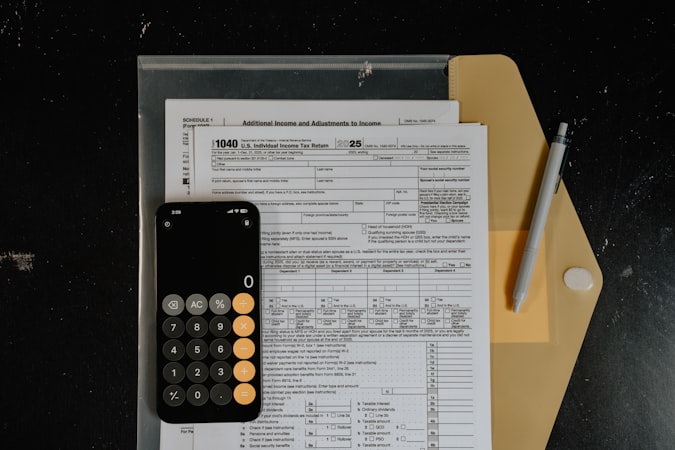
One of the biggest advantages of hiring an accountant who specializes in real estate is the optimization of your tax deductions. Revenu Québec and the CRA allow you to deduct a wide range of expenses related to the management and maintenance of your rental properties, thereby reducing your taxable income.
The operating expenses are the costs incurred to manage, maintain, and operate your rental properties. They are fully deductible in the year they are incurred. Here are the main categories of eligible operating expenses:
An accountant specializing in real estate ensures that all these expenses are properly documented and deducted. According to a study of building owners in Quebec, owners who handle their own accounting miss an average of 15% to 20% of the tax deductions to which they are entitled, simply because they are unaware that they qualify or do not document them properly.
The capital expenditures are the amounts incurred to purchase, improve or extend the lifespan of your building. Unlike operating expenses, they are not fully deductible in the year they are incurred. You must depreciate them depreciate (or claim capital cost allowance, CCA) over several years.
Examples of capital expenditures:
An accountant specializing in real estate can accurately determine whether an expense is current (immediately deductible) or capital (amortized over several years), and calculates the optimal CCA to minimize your tax burden. The distinction between these two types of expenses is often complex and is subject to numerous audits by Revenu Québec and the CRA.
Here are the most common mistakes rental property owners make when it comes to tax deductions:
An accountant specializing in real estate can help you avoid all these mistakes and maximize your tax savings legally.

The tax structure under which you hold your rental properties has a major impact on your overall tax burden. An accountant specializing in real estate can advise you on the best structure based on the size of your portfolio, your income, and your long-term goals.
Ownership in One’s Own Name (Individual) :
Ownership through a corporation :
When Should You Incorporate? Generally speaking, incorporation becomes advantageous when:
An accountant specializing in real estate performs a cost-benefit analysis tailored to your situation to determine whether incorporation is worthwhile.
A family trust is a more complex structure used by owners of large real estate portfolios (assets valued at over $2 million) to optimize estate planning and income structuring with family members.
Benefits :
Disadvantages :
Family trusts are generally reserved for large real estate portfolios and require support from a specialized accountant and a tax lawyer.
If you are a Non-resident of Canada who owns rental property in Quebec, you are subject to a withholding tax of 25% on your gross rental income, unless you file a section 216 election. This option allows you to file a Canadian tax return and pay taxes on your rental income net (after deductions) rather than on gross income, which is generally much more advantageous.
An accountant specializing in real estate can help you make this decision and file the necessary returns to minimize your tax liability as a non-resident.
| Criteria | Individual | Corporation | Family Trust |
|---|---|---|---|
| Tax Rates | Up to 53.3% (maximum marginal rate) | ~26.5% (investment income) | Beneficiary Rates |
| Startup Costs | $0 (none) | $500-$2,000 | $2,000-$5,000 |
| Annual Accounting Costs | $500-$1,500 | $2,000-$4,000 | $3,000-$6,000 |
| Income Splitting | Limited | Possible (dividends) | Very flexible |
| Legal Liability | Unlimited | Limited | Limited |
| Administrative Complexity | Low | Moderate | High |
| Recommended for | Small property owners (1-3 units) | Medium to large portfolios ($50,000+ net income per year) | Large portfolios ($2 million+) |
An accountant specializing in real estate offers a range of services tailored to the specific needs of rental property owners. Here are the main services offered:
The bookkeeping Managing a real estate portfolio requires specific expertise:
Accurate bookkeeping is the foundation of optimized tax planning. It allows your accountant (or tax specialist) to apply all the deductions you’re entitled to when preparing your tax returns.
Beyond simply filing tax returns, a real estate accountant offers you proactive tax planning :
In the event of a tax audit by Revenu Québec or the CRA, your real estate accountant:
Having a specialized accountant by your side during an audit significantly increases your chances of a favourable outcome and reduces the stress associated with the process.
The Rates for accountants specializing in real estate in Quebec vary depending on the size of your portfolio, the complexity of your transactions, and the services requested. Here is an indicative fee schedule for 2026:
| Portfolio Size | Services Included | Annual Fee (2026) |
|---|---|---|
| Small Landlord (1-3 units) | Basic bookkeeping, RL-31 slip preparation, T776/Schedule E filing, tax consultation | $800-$1,500 |
| Mid-size landlord (4-10 units) | Detailed bookkeeping, RL-31 slips, tax returns, CCA optimization, tax planning | $2,000-$3,500 |
| Large portfolio (10+ units or multiple buildings) | Comprehensive multi-property bookkeeping, RL-31 slips, complex tax returns, advanced tax planning, strategic advice | $4,000-$8,000+ |
| Corporate Portfolio (Properties Owned by a Corporation) | Corporate bookkeeping, financial statements, T2/CO-17 filing, personal tax returns, corporate tax planning | $5,000-$10,000+ |
| Family Trust (Complex structure) | Trust bookkeeping, financial statements, T3/TP-646 filing, beneficiary reports, estate planning | $6,000-$12,000+ |
Additional Services (hourly or flat-rate fees) :
Important : These rates are approximate and vary depending on the accounting firm, the region (Montreal vs. other regions), and the complexity of your situation. A CPA specializing in real estate generally charges higher fees than a generalist accountant, but the tax savings they generate far exceed their fees.
To get personalized quotes from accountants specializing in real estate in Quebec, visit Our comprehensive guide to accountant fees in Quebec or Use Bankeo’s free matching service.
An accountant who specializes in rental real estate : Bankeo gives you access to a network of accountants specializing in real estate throughout the province. Whether you own a single multi-unit property or an entire portfolio, you can take advantage of this free matching service to find the ideal accountant for your properties.
Bankeo is a free accountant matching service which connects owners of rental properties with accountants specializing in real estate throughout Quebec. Since 2023, Bankeo has received more than 15,000 requests from entrepreneurs and property owners looking for the ideal accountant for their situation, with a network of more than 1,500 accountants.
Here’s how the Bankeo process works:
Why use Bankeo instead of searching on your own?
To find the ideal real estate accountant for your portfolio, Fill out the Bankeo form in 3 minutes.
To deepen your knowledge of real estate accounting and taxation in Quebec, check out these Resources:
Bankeo connects building owners with real estate accountants throughout Quebec, for free. Find the ideal accountant in 3 minutes.
Find my accountantA general accountant can manage a small real estate portfolio (1-2 properties) involving simple transactions. However, as soon as you own 3 or more units, or if you’re considering incorporating, an accountant specializing in real estate is highly recommended. The specific tax considerations of rental real estate (RL-31 slip, current expenses vs. capital expenditures, depreciation, choice of business structure, GST/QST) require in-depth expertise. A specialized accountant maximizes your deductions and saves you far more than their additional fees.
Rates vary depending on the size of your portfolio: $800-$1,500 for a small property owner (1-3 units), $2,000-$3,500 for an average portfolio (4-10 units), and $4,000-$8,000+ for a large portfolio (10+ units). If your properties are held by a corporation or trust, rates increase due to the added administrative complexity. These fees generally include bookkeeping, preparing RL-31 slips, and filing tax returns.
The RL-31 slip is a tax document that you must file for each tenant by February 28 each year. It shows the total amount of rent paid during the previous year. This statement allows your tenants to claim the solidarity tax credit. Failure to comply with this requirement results in a $100 penalty per missing statement. An accountant specializing in real estate handles the preparation and filing of these reports to ensure you remain in compliance.
The main deductions include: mortgage interest (fully deductible), property taxes, insurance, Repairs and Maintenance (painting, plumbing, roofing), utilities (heating, electricity if paid by the landlord), management fees, advertising to find tenants, Legal and Accounting Fees, and depreciation (CCA) on the building and equipment. A specialized accountant ensures that you claim all eligible deductions and don't miss any opportunities for tax savings.
A current expense is an expense that maintains your building in good condition (roof repairs, painting, faucet replacement). It is fully deductible the year it is incurred. A capital expenditure improves or extends the lifespan of the building (complete kitchen renovation, roof replacement, addition). It must be amortized over several years (CCA). This distinction is crucial because misclassifying an expense can result in the deduction being denied during an audit. Your specialized accountant makes sure the classification is correct.
Incorporation becomes advantageous when: (1) Your portfolio generates Net rental income exceeding $50,000 per year, (2) You already have a high earned income (marginal tax rate above 45%), (3) You want to reinvest profits in new properties, or (4) You want to protect your personal assets. Incorporation allows you to benefit from the corporate tax rate (~26.5%) rather than the personal marginal tax rate (up to 53.3%). A specialized accountant will conduct a personalized cost-benefit analysis to determine whether this is financially beneficial in your case.
No. Residential rents (housing) are exempt from GST/QST in Quebec. You do not have to collect or remit these taxes on your residential rent. However, if you rent out commercial spaces (offices, retail spaces, warehouses), rent is taxable, and you must register for GST and QST, collect these taxes (5% + 9.975%), and remit them. In return, you can claim input tax credits and input tax refunds (ITCs/ITRs) for expenses related to your commercial properties.
No. Major renovations (complete kitchen remodel, roof replacement, adding a storey) are considered capital expenditures and must be amortized over several years. The depreciation rate depends on the category of expense (generally 4% per year for the building, 20% for equipment). Only the repairs that keep the building in good condition (without improving it) are immediately deductible. A specialized accountant makes sure your expenses are classified correctly and that depreciation is calculated optimally.
Revenu Québec and the CRA require that you keep all your accounting documents (invoices, receipts, lease agreements, bank statements, RL-31 slips) for at least 6 years after the relevant tax year. For example, for your 2026 tax returns, you must keep your documents until 2032. In practice, it’s recommended that you keep them longer (10 years) because certain transactions (such as the sale of a property or the calculation of capital gains) may require older documents. A specialized accountant can help you organize and file your documents properly.
Bankeo is a Free accountant matching service that connects building owners with real estate accountants throughout Quebec. You fill out an online form in 3 minutes, the Bankeo team analyzes your needs and introduces you to accountants from the network of 1,500+ accountants who meet your criteria (real estate expertise, location, budget). Meet with the suggested accountants with no obligation and choose the one that’s right for you. The service is 100% free for property owners. Start your matching here.
General information provided for informational purposes only, based on known 2026 tax rules. It is not a substitute for the advice of a Chartered Professional Accountant (CPA): always consult a professional regarding your specific situation.
Bankeo's matching service is 100% free, always. You only ever pay your accountant, directly.
We'll introduce you to the right accountant from our network for your needs, with as many profiles as it takes.
We’ll support you for as long as it takes. We’re here for you every step of the way.
Your request will be processed within 2 business days.